
Enterprise digital transformation is no longer driven by isolated tools or temporary technology upgrades. Instead, it depends on how effectively systems communicate, share data, and support decision-making across the organization.
- Understanding ERP Integration in a Digital Enterprise
- Improving Operational Efficiency Across Departments
- Supporting Data-Driven Decision Making
- Enabling Business Agility
- Strengthening Security and Compliance
- ERP Integration as a Strategic Transformation Tool
- Practical Strategies for Successful ERP Integration
- Strengthen Your Digital Transformation Strategy
At the center of this transformation is ERP integration. By connecting core business systems and applications, ERP integration enables organizations to turn digital ambitions into real operational outcomes.
In today’s fast-moving environment—shaped by technology insights, changing customer expectations, and intense market competition—companies cannot afford disconnected systems or fragmented data.
ERP integration provides the unified foundation that supports scalable and intelligent growth.
Understanding ERP Integration in a Digital Enterprise
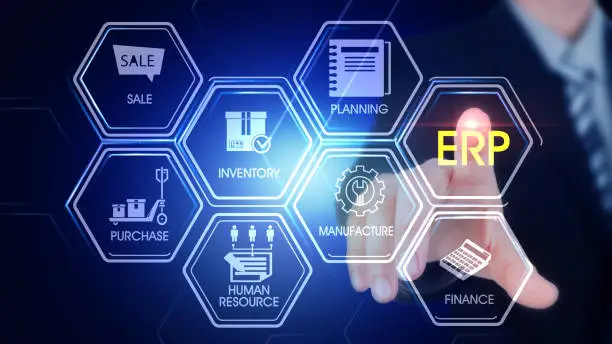
ERP integration involves connecting an Enterprise Resource Planning (ERP) system with other business applications, platforms, and data sources.
These systems may include:
- Customer Relationship Management (CRM) platforms
- HR management systems
- Analytics tools
- Cloud-based applications
When these systems are integrated, information flows seamlessly across departments.
In a digitally transformed enterprise, ERP integration ensures that finance, HR, sales, marketing, and operations teams work from the same real-time data.
Rather than managing separate tools with disconnected information, organizations gain a single operational view that improves coordination and planning.
Improving Operational Efficiency Across Departments
Disconnected systems slow down processes and increase the likelihood of errors.
ERP integration removes these obstacles by aligning workflows and automating information exchange between systems.
For example:
- Finance teams gain more accurate reporting and access to relevant finance industry updates.
- Operations teams improve visibility into supply chains and resource planning.
- Sales teams can track customer activity and performance metrics more effectively.
HR departments also benefit from integrated systems.
Modern ERP environments support:
- Workforce planning
- Payroll management
- Performance monitoring
These capabilities align closely with evolving HR trends and insights, allowing HR teams to focus more on strategic workforce development rather than manual administrative tasks.
Supporting Data-Driven Decision Making
Successful digital transformation relies heavily on high-quality and accessible data.
ERP integration centralizes data from multiple business systems and makes it available for analysis across departments.
This allows leaders to rely on consistent metrics and reliable insights, rather than conflicting reports from separate systems.
Integrated data supports strategic initiatives such as:
- Sales forecasting and sales strategies and research
- Market insights through marketing trends analysis
- Financial performance tracking
When customer, financial, and operational data are connected, organizations gain a clearer understanding of performance and opportunities.
Enabling Business Agility
Markets evolve rapidly due to changes in customer behavior, regulatory environments, and innovations reported in IT industry news.
ERP integration provides the flexibility organizations need to adapt without disrupting operations.
Integrated systems allow companies to:
- Introduce new digital tools
- Expand into new markets
- Scale operations efficiently
ERP integration also improves customer experience.
When sales, marketing, and customer support teams access shared data, they can respond faster, personalize services, and maintain consistent communication across channels.
This agility is a major advantage in competitive markets.
Strengthening Security and Compliance
As organizations expand their digital ecosystems, security and compliance become increasingly complex.
ERP integration helps address these challenges by centralizing data governance and standardizing access controls.
With integrated systems, businesses can maintain:
- Consistent security policies
- Clear audit trails
- Reliable compliance reporting
This approach reduces vulnerabilities that often occur when multiple disconnected systems manage sensitive data.
For industries operating under strict regulatory frameworks, integrated ERP environments help maintain compliance while still allowing operational flexibility.
ERP Integration as a Strategic Transformation Tool
Digital transformation is not a one-time project—it is a continuous evolution.
ERP integration provides the stable core that enables organizations to innovate while maintaining operational efficiency.
When ERP systems are integrated with other platforms, businesses move beyond simple automation toward intelligent and connected operations.
Organizations that treat ERP integration as a strategic capability rather than a technical task are better positioned to unlock long-term value from their digital initiatives.
Practical Strategies for Successful ERP Integration
Organizations planning ERP integration should begin by aligning integration objectives with their broader business goals.
Key success factors include:
- Strong leadership and project ownership
- Effective change management strategies
- Realistic implementation timelines
Businesses should also select integration solutions that support future scalability, not just short-term needs.
Investing in employee training and strategic partnerships is equally important.
Teams must understand both business processes and technology capabilities to maximize the value of integrated systems.
Staying informed through IT industry news and collaborating across departments helps organizations refine their integration strategies as markets evolve.
Strengthen Your Digital Transformation Strategy
When implemented thoughtfully, ERP integration becomes a powerful driver of efficiency, insight, and business agility.
Organizations that build strong integration foundations are better prepared to innovate, scale, and respond to changing market conditions.
Ittrendswire delivers expert perspectives on technology insights, IT industry news, finance industry updates, HR trends and insights, marketing trends analysis, and sales strategies and research.
Connect with Ittrendswire to discover strategies that help your enterprise accelerate digital transformation and achieve sustainable growth.