


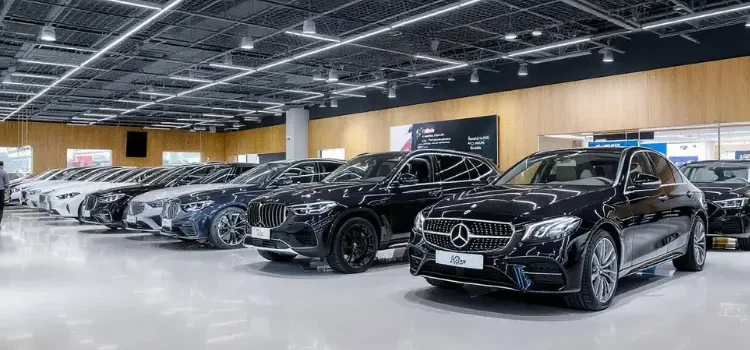
The automotive industry enters February 2026 with measurable momentum. Analysts project double-digit wholesale growth driven by a convergence of improving retail fundamentals, macroeconomic stability, and manufacturer discipline — a combination that positions the sector for one of its strongest months in recent memory.
- Retail Demand Continues to Support Industry Expansion
- Manufacturer Strategies Driving Wholesale Confidence
- Changing Consumer Preferences Influence Sales Trends
- Broader Economic Signals Strengthen Industry Outlook
- Dealer Networks Adapt to a Competitive Environment
- Digital Innovation Reshapes Automotive Marketing
- Insights for Businesses Watching Automotive Growth
Retail Demand Continues to Support Industry Expansion
Retail performance remains the foundational driver behind wholesale growth expectations. Urban markets are recording stable inquiry volumes while semi-urban regions are adding incremental demand through first-time vehicle ownership. Seasonal purchasing patterns amplify this effect in February, as consumers finalize deferred buying decisions made at the start of the year. Manufacturers are aligning production schedules with these retail signals, ensuring that wholesale shipments reflect genuine market demand rather than speculative inventory accumulation.
Finance accessibility continues to underpin buyer activity. Competitive lending structures and flexible repayment options are drawing in buyers who had previously delayed purchases, confirming that credit availability remains a direct lever on automotive sales momentum.
Manufacturer Strategies Driving Wholesale Confidence
Automakers are responding to market signals with precision rather than volume. Real-time demand forecasting, predictive analytics, and digital transformation initiatives are guiding production planning and dealership allocation decisions. This data-centric approach reduces operational inefficiencies while improving responsiveness to shifting consumer preferences. Strengthened dealer partnerships — supported by incentive alignment and improved logistics — further reinforce healthy inventory turnover and wholesale stability.
Changing Consumer Preferences Influence Sales Trends
Buyer expectations have evolved substantially. Safety technology, digital connectivity, and long-term ownership value now rank among the top purchase criteria. Digital research channels — including online comparisons, virtual consultations, and transparent pricing tools — are increasingly decisive in the customer journey, often before any showroom visit occurs. Dealerships are responding by deepening investment in digital engagement platforms, reflecting broader technology-driven transformation across the retail sector.
Hybrid work models and stabilizing commute patterns continue to influence personal mobility demand, further connecting vehicle purchasing behavior to employment and urban development trends.
Broader Economic Signals Strengthen Industry Outlook
Macroeconomic conditions provide a supportive backdrop. Inflation trends are becoming more predictable, consumer spending is recovering across key sectors, and corporate investment and hiring activity are rising — factors that historically correlate with increased discretionary spending on vehicles. Rural demand, supported by agricultural income cycles, adds a diversified growth dimension alongside urban recovery, resulting in a balanced industry expansion rather than segment-specific volatility.
Dealer Networks Adapt to a Competitive Environment
Dealerships are repositioning from transactional sales centers to experience-driven retail environments. Personalized communication strategies, faster delivery timelines, and disciplined inventory management are improving conversion rates and customer satisfaction. Workforce development programs are gaining equal priority, with skilled professionals now essential to managing integrated digital and physical customer journeys. Dealers investing in talent and technology are recording stronger repeat business outcomes.
Digital Innovation Reshapes Automotive Marketing
Marketing strategy in automotive retail has undergone significant transformation. AI-powered demand prediction, customer segmentation tools, and data-driven campaign execution are enabling brands to deliver targeted, regionally relevant messaging at scale. Social media, search optimization, and localized promotions are reducing acquisition costs while improving conversion efficiency. These advancements also build long-term brand loyalty, creating a sustained pipeline for wholesale demand growth.
Insights for Businesses Watching Automotive Growth
The automotive sector’s February performance offers cross-industry learnings. Aligning supply with verified demand, leveraging predictive analytics, and maintaining adaptive marketing frameworks are principles with universal application. Organizations that integrate data-driven forecasting with customer-centric engagement and flexible workforce models are best positioned for sustainable expansion — regardless of sector. The automotive industry demonstrates that disciplined execution, supported by accurate market intelligence, consistently produces durable growth outcomes.
BusinessInfoPro delivers expert analysis that helps organizations interpret evolving industry signals and make informed strategic decisions. Connect with BusinessInfoPro today to explore deeper insights that can accelerate your business growth journey.