


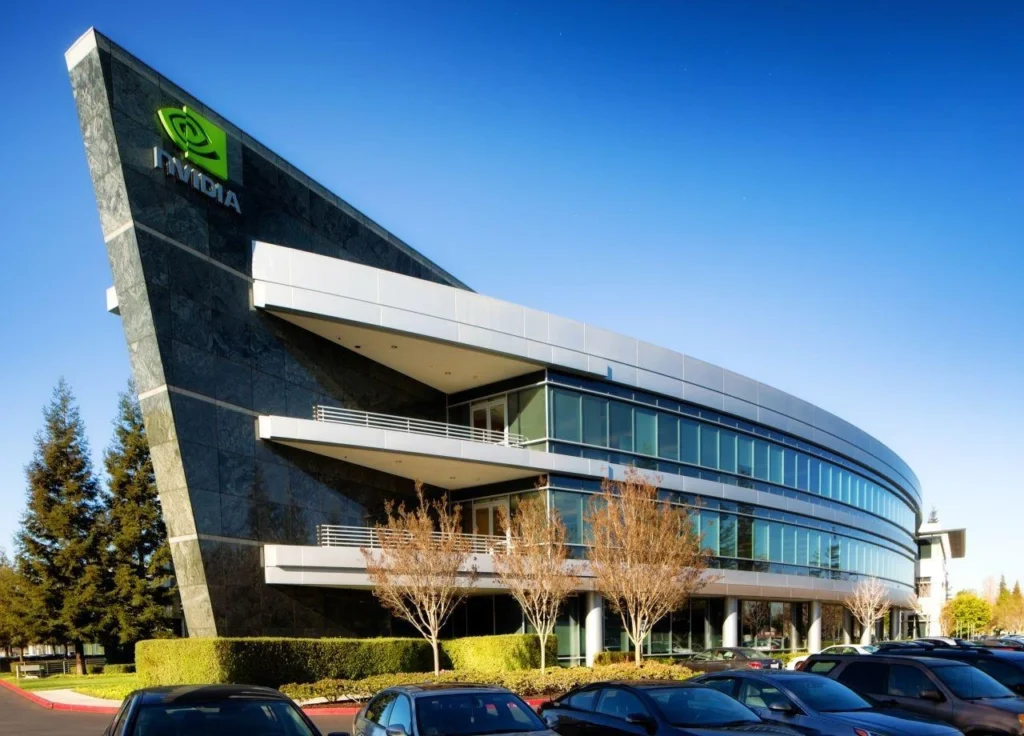
A decade ago, most people associated NVIDIA with gaming.
- The Company That Prepared Before Everyone Else
- GPUs Became the Fuel Behind AI
- The CUDA Advantage Most People Ignore
- The AI Boom Created a New Gold Rush
- Why AI Infrastructure Matters More Than Apps
- Competition Is Growing Rapidly
- AI Is Increasing Demand for Data Centers
- The Strategic Importance of Semiconductors
- Why Businesses Are Paying Attention
- The Future of AI May Depend on Infrastructure More Than Innovation
The company was known for building powerful graphics cards used by gamers, video editors, and PC enthusiasts. Its products were respected inside the tech world, but outside of it, NVIDIA was still considered a niche hardware company competing in the gaming market.
Today, that perception has completely changed.
NVIDIA has become one of the most influential companies in artificial intelligence, controlling the infrastructure powering everything from ChatGPT-style systems to self-driving vehicles, robotics, advanced cloud computing, and enterprise AI platforms.
What makes NVIDIA’s rise remarkable is that it wasn’t built through flashy consumer products or social media dominance. It happened quietly, strategically, and years before most companies even realized AI would become the next technological revolution.
The Company That Prepared Before Everyone Else
Most technology companies reacted to the AI boom after it became mainstream.
NVIDIA prepared for it years earlier.
The company understood something many others underestimated: artificial intelligence would require enormous computing power.
Training modern AI models involves processing massive amounts of data simultaneously. Traditional CPUs were not designed for that kind of workload. GPUs, however, were perfect for parallel processing.
This became NVIDIA’s biggest advantage.
What started as gaming hardware unexpectedly became the foundation for machine learning and AI development.
While other companies focused on smartphones, advertising platforms, and consumer applications, NVIDIA focused on computational power — the one thing every future AI system would eventually depend on.
That decision changed the company forever.
GPUs Became the Fuel Behind AI
Artificial intelligence models require billions, sometimes trillions, of calculations during training.
GPUs can handle these operations far more efficiently than standard processors because they are designed to process multiple tasks simultaneously.
As AI systems became larger and more advanced, demand for GPU infrastructure exploded.
Research labs needed them.
Cloud providers needed them.
Startups needed them.
Governments needed them.
Suddenly, nearly every major AI breakthrough depended on NVIDIA hardware somewhere behind the scenes.
This created a unique position in the industry.
Unlike software companies competing for users, NVIDIA became the supplier powering the entire AI ecosystem.
The CUDA Advantage Most People Ignore
One of NVIDIA’s smartest long-term decisions was not hardware — it was software.
Years ago, the company launched CUDA, a computing platform allowing developers to use GPUs for purposes beyond graphics rendering.
At the time, many people barely noticed.
But over time, CUDA became deeply integrated into AI research and machine learning development.
Universities trained students using it. Researchers built frameworks around it. AI companies optimized systems for it.
That created an ecosystem effect.
Even competitors producing powerful chips struggled because developers were already heavily invested in NVIDIA’s software environment.
In technology, ecosystems often matter more than raw performance.
And NVIDIA understood this earlier than most hardware companies.
The AI Boom Created a New Gold Rush
When generative AI exploded globally, companies rushed to build their own models, AI assistants, automation systems, and enterprise tools.
But every AI company faced the same problem:
they needed computing infrastructure.
Massive data centers filled with GPUs became the backbone of modern AI development.
This demand transformed NVIDIA’s business almost overnight.
Cloud providers like Amazon, Microsoft, and Google began investing billions into AI infrastructure.
Startups raised enormous funding rounds largely to secure GPU access.
Some companies reportedly waited months just to obtain enough AI hardware capacity.
NVIDIA was no longer simply selling chips.
It had become the central supplier in the largest technology arms race of the modern era.
Why AI Infrastructure Matters More Than Apps
Many people focus on AI applications because they are visible.
Chatbots, image generators, AI video tools, and automation platforms receive public attention. But beneath every successful AI application is infrastructure.
And infrastructure businesses often become the most powerful.
Cloud computing created giants because companies preferred renting infrastructure instead of building their own.
AI may follow the same pattern.
Instead of every company building custom AI hardware, businesses increasingly depend on large-scale infrastructure providers.
NVIDIA sits directly in the center of that ecosystem.
That position gives it enormous influence over pricing, availability, and technological direction across the AI industry.
Competition Is Growing Rapidly
Despite NVIDIA’s dominance, competitors are aggressively trying to reduce dependence on its hardware.
Major companies are now building their own AI chips:
- Google developed Tensor Processing Units (TPUs)
- Amazon introduced custom AI chips for AWS
- Microsoft increased internal AI hardware investments
- AMD continues expanding its AI accelerator business
- Startups are developing specialized AI processors
Governments are also becoming concerned about global dependence on a small number of semiconductor suppliers.
This means the AI hardware race is far from over.
However, replacing an established ecosystem is extremely difficult.
Hardware alone is not enough. Companies must also build developer trust, software compatibility, and scalable infrastructure support.
That takes years.
AI Is Increasing Demand for Data Centers
The AI revolution is also transforming physical infrastructure globally.
Data centers are expanding rapidly to support AI workloads.
Electricity consumption is increasing.
Cooling systems are becoming more advanced.
Cloud infrastructure spending is accelerating worldwide.
Modern AI models require extraordinary amounts of computational power, and that demand continues growing as systems become more capable.
This creates opportunities not only for semiconductor companies but also for:
- Cloud providers
- Energy companies
- Networking infrastructure firms
- Cybersecurity providers
- Enterprise SaaS platforms
AI is not just creating a software market.
It is reshaping the entire technology economy.
The Strategic Importance of Semiconductors
The global semiconductor industry has become increasingly geopolitical.
Countries now view advanced chip manufacturing as a matter of national security and economic competitiveness.
Supply chains are under pressure.
Governments are investing heavily in domestic semiconductor production.
Export restrictions and trade regulations are influencing the AI industry at the highest levels.
NVIDIA operates directly within this complex global environment.
Its importance is no longer limited to technology markets alone.
The company now sits at the intersection of AI, cloud computing, international trade, and economic strategy.
Why Businesses Are Paying Attention
Enterprise companies that once ignored AI are now aggressively exploring it.
Not because AI is trendy, but because productivity expectations are changing rapidly.
Businesses want:
- Faster automation
- Better analytics
- Reduced operational costs
- Smarter customer support
- AI-assisted workflows
- Predictive business intelligence
As enterprise AI adoption grows, demand for infrastructure continues rising alongside it.
That benefits companies providing the underlying systems powering AI deployment.
The Future of AI May Depend on Infrastructure More Than Innovation
Many AI startups will come and go.
Applications will evolve constantly.
Consumer trends will change.
But infrastructure companies supporting the entire ecosystem often maintain long-term influence.
NVIDIA recognized early that the future of AI would not only be about algorithms or applications.
It would depend on the computational engines capable of powering them.
That strategic understanding transformed the company from a gaming hardware manufacturer into one of the most important businesses in modern technology.
And as artificial intelligence continues expanding into nearly every industry, the importance of AI infrastructure may only become greater in the years ahead.