

People often describe Apple as one of the most innovative companies in the world.
- Apple Built an Ecosystem Instead of Just Products
- Simplicity Became a Business Strategy
- Hardware and Software Under One Roof Changed Everything
- Apple Turned Branding Into Emotional Identity
- Privacy Became a Competitive Differentiator
- The Company Rarely Rushes Into Trends
- Apple’s Real Business Is Customer Retention
- The Future Challenge Is Artificial Intelligence
- Apple Proved That Control Can Be More Powerful Than Speed
But the truth is more complicated.
Apple did not always invent the first smartphone, the first music player, the first smartwatch, or even the first tablet. In many cases, competing products already existed before Apple entered the market.
Yet Apple repeatedly became the company that dominated consumer attention.
The reason was not simply innovation.
It was control.
Apple Built an Ecosystem Instead of Just Products
Most technology companies sell devices.
Apple built an environment.
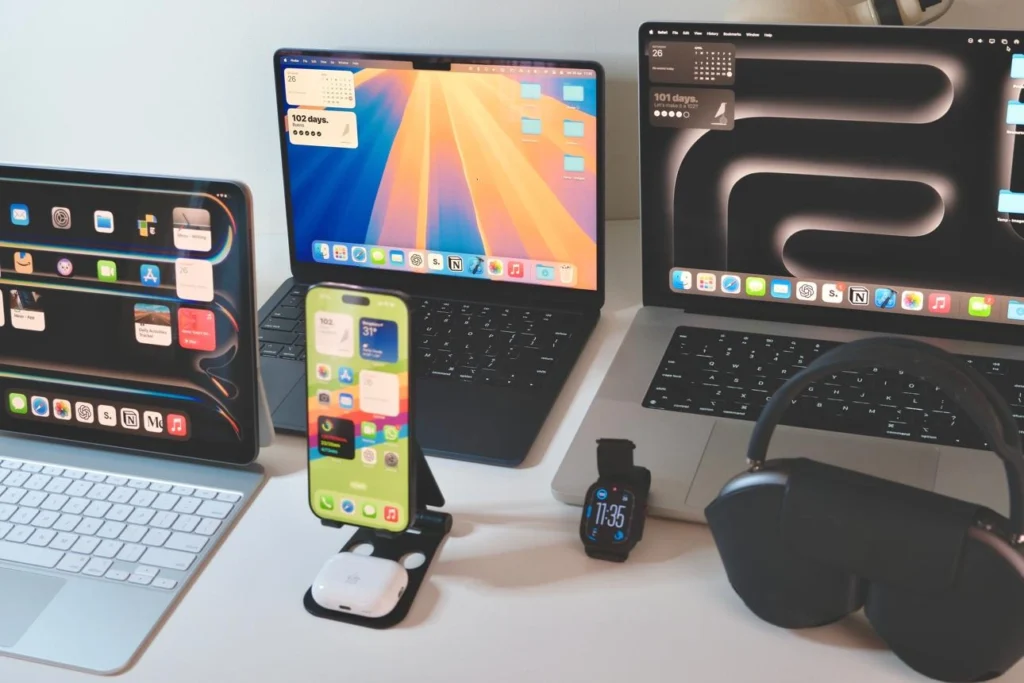
The iPhone connected smoothly with the MacBook.
The MacBook synced effortlessly with AirPods.
The Apple Watch extended the iPhone experience.
iCloud tied everything together quietly in the background.
Each product strengthened the value of the others.
This ecosystem strategy created something extremely powerful:
switching became inconvenient.
A customer using multiple Apple products often experiences a level of integration difficult to replicate elsewhere. Messages sync instantly. Files move automatically. Calls transfer seamlessly between devices.
The experience feels unified rather than fragmented.
And that consistency became one of Apple’s strongest competitive weapons.
Simplicity Became a Business Strategy
Many technology companies compete through features.
Apple often competes through reduction.
Its products usually focus heavily on:
clean interfaces, minimal setup, predictable behavior, and controlled user experiences.
That simplicity is not accidental.
Apple understands that most consumers do not want to manage technology constantly. They want devices that feel reliable without requiring technical expertise.
While competitors sometimes overwhelm users with customization and complexity, Apple positioned convenience itself as a premium experience.
That approach helped the company build unusually strong customer loyalty.
Hardware and Software Under One Roof Changed Everything
One of Apple’s biggest strategic advantages is vertical integration.
The company designs both hardware and software together.
This allows tighter optimization across:
performance, battery efficiency, security, animations, app behavior, and ecosystem integration.
Most competitors depend partially on third-party operating systems, manufacturers, or component ecosystems. Apple controls much more of the stack internally.
That level of control creates consistency.
And consistency matters enormously in consumer technology.
Users may not always understand the technical reasons behind smooth performance, but they notice the experience.
Apple Turned Branding Into Emotional Identity
Apple products are not marketed only as devices.
They are positioned as lifestyle symbols.
For years, the company built advertising around creativity, ambition, simplicity, and modern identity rather than technical specifications alone.
This psychological positioning made Apple products feel aspirational.
Customers often associate the brand with:
professionalism, design quality, productivity, and premium status.
Very few technology companies achieved this level of emotional branding successfully.
And once emotional attachment forms, customer retention becomes far stronger than feature-based competition alone.
Privacy Became a Competitive Differentiator
As digital privacy concerns increased globally, Apple identified another opportunity.
While many technology companies built business models heavily dependent on advertising and data collection, Apple increasingly marketed itself around privacy protection.
Whether fully perfect or not, the messaging was effective.
Consumers worried about tracking, surveillance, and data misuse started viewing privacy as a product feature rather than a technical issue.
Apple turned trust into part of its business strategy.
That positioning became especially important as governments worldwide increased scrutiny around digital platforms and user data practices.
The Company Rarely Rushes Into Trends
One interesting aspect of Apple’s strategy is patience.
The company often avoids entering markets first.
Instead, it waits, studies consumer behavior, improves execution, and enters when technology becomes mature enough for mainstream adoption.
Critics sometimes interpret this as being “late.”
But Apple usually prioritizes stability and ecosystem integration over speed alone.
This reduces the risk of launching unfinished products that damage long-term user trust.
In technology, moving first is not always the same as winning.
Apple’s Real Business Is Customer Retention
Many businesses focus heavily on acquiring users.
Apple focuses heavily on keeping them.
The ecosystem, branding, retail experience, software updates, customer support, and device integration all reinforce long-term loyalty.
This creates recurring revenue opportunities across:
services, subscriptions, accessories, cloud storage, app purchases, and future hardware upgrades.
A loyal customer inside the ecosystem often becomes far more valuable over time than a one-time buyer.
That long-term thinking shaped much of Apple’s growth strategy.
The Future Challenge Is Artificial Intelligence
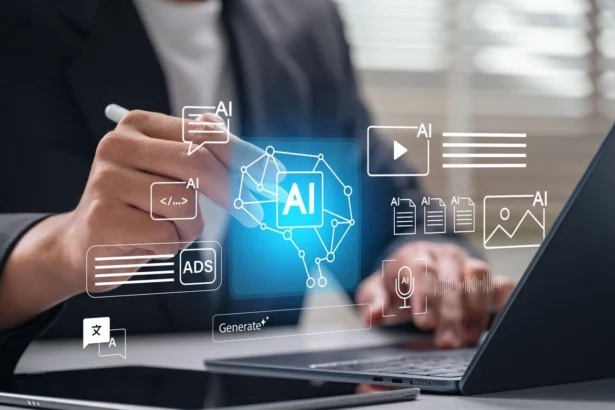
The next major challenge for Apple may be AI.
Competitors are rapidly integrating generative AI into:
search, productivity tools, operating systems, and cloud platforms.
Apple now faces pressure to adapt without compromising its carefully controlled ecosystem and privacy-focused positioning.
The company’s response to AI could define its next decade.
Because while Apple mastered ecosystem control during the smartphone era, the AI era may reward entirely different types of technological leadership.
Apple Proved That Control Can Be More Powerful Than Speed
The technology industry often celebrates disruption and rapid experimentation.
Apple built success differently.
The company focused on controlling the experience:
hardware, software, branding, ecosystem design, customer relationships, and increasingly even semiconductor development.
That level of integration created one of the most profitable and loyal customer ecosystems in modern business history.
And it demonstrated something many competitors still struggle to replicate:
Sometimes the most powerful technology strategy is not building the most products.
It is building the most connected experience.