
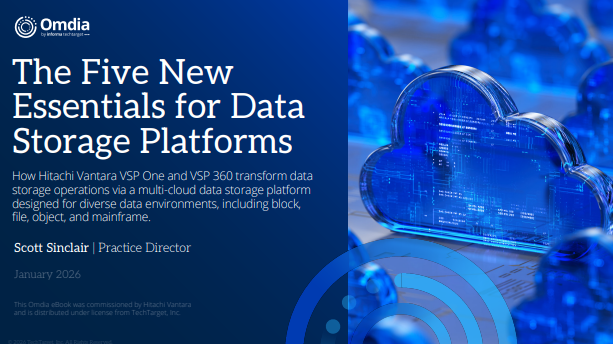
Success in business is fueled by the effective use of data, but too often, an organization’s high-value data is dispersed across multiple public clouds, data centers, and edge locations, with each site acting as a disparate silo. The potential value of a business’s data depends on the organization’s ability to eliminate the restrictions of data storage and its accompanying data management solutions. Organizations need to take a platform approach to both data and storage that delivers agility, flexibility, and accelerated access to data while continuing to control for protection and security.
Different data types (block, file, object, and mainframe) often place different requirements upon infrastructure, and these differences in demands have led to the prioritization of diverse multi-cloud environments. The race to harness the agility and flexibility benefits of multi-cloud operations, however, has resulted in systemic challenges when it comes to storing, managing, protecting, and using data, increasing cost, complexity, and risk to the business. At scale, the impacts of dispersed data and siloed storage spanning across on-premises data centers as well as public cloud infrastructures hinder operations and the execution of digital initiatives to the point that the benefits of the cloud often evaporate entirely.