
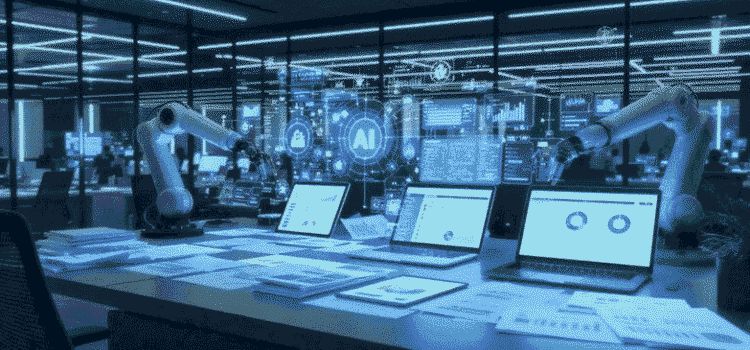
Artificial intelligence has moved from being a futuristic concept to a practical, transformative force within modern workplaces. Across industries, organizations are integrating intelligent systems to enhance productivity, improve decision-making, and redefine how work is performed. AI in the workplace is no longer limited to automation—it is reshaping the very nature of jobs, skills, and organizational structures.
- Understanding the Role of AI in Modern Work Environments
- Enhancing Productivity Through Intelligent Automation
- Data-Driven Decision Making and Business Intelligence
- Transforming Customer Experience and Engagement
- Reshaping Workforce Roles and Skill Requirements
- Applications of AI Across Business Functions
- Challenges and Considerations in AI Adoption
- Emerging Trends Shaping the Future of AI in Workplaces
- Ethical and Human-Centric AI Implementation
- Conclusion
In 2025, the role of AI extends far beyond operational efficiency. It is becoming a strategic enabler that allows businesses to innovate faster, respond to market changes more effectively, and create more personalized experiences for both customers and employees. As this transformation accelerates, understanding the impact of AI on modern work becomes essential for both organizations and individuals.
Understanding the Role of AI in Modern Work Environments
AI in the workplace refers to the use of machine learning, automation tools, and intelligent algorithms to support or enhance human tasks. These systems are capable of processing large volumes of data, identifying patterns, and making predictions that would be difficult for humans to achieve at scale.
Unlike traditional software, AI systems learn continuously. They improve over time by analyzing new data and adapting to changing conditions. This capability allows organizations to move from static processes to dynamic, data-driven operations.
From managing workflows to assisting in complex decision-making, AI is becoming deeply embedded in everyday business activities. It is not replacing work entirely but transforming how work is done, making it more efficient, accurate, and responsive.
Enhancing Productivity Through Intelligent Automation
One of the most immediate benefits of AI in the workplace is its ability to automate repetitive and time-consuming tasks. Activities such as data entry, scheduling, reporting, and routine customer interactions can now be handled by intelligent systems.
This automation frees employees from administrative burdens, allowing them to focus on tasks that require creativity, strategic thinking, and problem-solving. As a result, productivity increases not just in terms of output but also in the quality of work being produced.
Organizations benefit from faster processes, reduced errors, and improved efficiency. Employees, on the other hand, gain more time to engage in meaningful work that contributes to innovation and growth.
Data-Driven Decision Making and Business Intelligence
AI has fundamentally changed how organizations make decisions. By analyzing vast datasets in real time, AI systems provide insights that help businesses understand trends, predict outcomes, and respond proactively.
Instead of relying on intuition alone, leaders can make informed decisions based on data-driven insights. This is particularly valuable in areas such as marketing, supply chain management, and financial planning, where timely and accurate information is critical.
Predictive analytics allows organizations to anticipate customer behavior, identify potential risks, and optimize operations. This ability to act ahead of time provides a significant competitive advantage in a rapidly changing market.
Transforming Customer Experience and Engagement
Customer expectations have evolved significantly, and AI is playing a key role in meeting these expectations. Intelligent systems enable organizations to deliver personalized experiences, respond quickly to inquiries, and maintain consistent communication across channels.
AI-powered chatbots and virtual assistants provide instant support, ensuring that customers receive assistance whenever they need it. These systems can handle common queries efficiently while escalating complex issues to human representatives.
In addition, AI analyzes customer interactions to identify patterns and preferences. This allows businesses to tailor their offerings, improve service quality, and build stronger relationships with their audience.
Reshaping Workforce Roles and Skill Requirements
The integration of AI into the workplace is transforming the roles employees play within organizations. As machines take over routine tasks, human work is shifting toward areas that require creativity, critical thinking, and emotional intelligence.
This transformation is not about job loss but about job evolution. New roles are emerging that focus on managing, interpreting, and collaborating with AI systems. Employees are expected to develop skills such as data literacy, digital fluency, and adaptability.
Continuous learning has become essential. Organizations are investing in training programs that help employees upskill and stay relevant in an AI-driven environment. This focus on development ensures that the workforce can adapt to technological changes and contribute effectively.
Applications of AI Across Business Functions
AI is being applied across various functions within organizations, each contributing to improved efficiency and performance. In recruitment, AI tools can analyze resumes, identify suitable candidates, and streamline hiring processes. In project management, AI systems optimize resource allocation, predict timelines, and identify potential risks.
Supply chain management benefits from predictive modeling, enabling businesses to forecast demand and manage inventory more effectively. In knowledge management, AI systems retrieve and organize information, making it easier for employees to access relevant data.
These applications demonstrate how AI is not confined to a single domain but is integrated across the entire organization, enhancing both operational and strategic capabilities.
Challenges and Considerations in AI Adoption
Despite its advantages, the adoption of AI in the workplace presents several challenges. One of the most significant concerns is data security and privacy. AI systems rely on large datasets, often containing sensitive information, making it essential to implement robust cybersecurity measures.
Another challenge is the risk of bias in AI algorithms. Since AI systems learn from data, any bias present in the data can lead to unfair or inaccurate outcomes. Organizations must ensure that their AI models are trained on diverse and representative datasets.
The cost of implementation can also be a barrier, particularly for smaller organizations. In addition, over-reliance on AI may reduce human oversight, increasing the risk of errors in critical decisions.
Addressing these challenges requires a balanced approach that combines technological innovation with ethical responsibility.
Emerging Trends Shaping the Future of AI in Workplaces
The future of AI in the workplace is being shaped by rapid technological advancements. Generative AI, advanced natural language processing, and intelligent automation are creating new possibilities for how work is performed.
AI-driven virtual assistants are becoming more sophisticated, capable of understanding context and providing actionable recommendations. Predictive analytics is evolving to offer deeper insights, enabling organizations to anticipate changes with greater accuracy.
Remote and hybrid work models are also benefiting from AI integration. Intelligent scheduling, task management, and collaboration tools help distributed teams operate efficiently, regardless of location.
As these trends continue to develop, AI will play an increasingly central role in defining how organizations operate and compete.
Ethical and Human-Centric AI Implementation
Responsible AI adoption is essential for long-term success. Organizations must ensure that their AI systems are transparent, fair, and accountable. Ethical considerations include protecting data privacy, preventing bias, and maintaining human oversight.
AI should be seen as a tool that enhances human capabilities rather than replacing them. By combining AI with human judgment, organizations can achieve better outcomes while maintaining trust and accountability.
Creating a human-centric approach to AI ensures that technology serves people, not the other way around. This balance is critical for building sustainable and ethical workplaces.
Conclusion
AI in the workplace is transforming how organizations operate, compete, and grow. It enhances productivity, enables smarter decision-making, and creates opportunities for innovation. At the same time, it reshapes roles, requiring employees to adapt and develop new skills.
The future of work lies in collaboration between humans and intelligent systems. Organizations that embrace this collaboration will be better positioned to navigate change and achieve long-term success.
As we move further into 2025, AI will continue to redefine the workplace. Those who adopt it thoughtfully—balancing efficiency with ethics—will lead the next era of business transformation.