


Most people think of Amazon as an e-commerce company.
- Amazon Solved Logistics Before Competitors Realized It
- Prime Changed Customer Psychology
- The Smartest Thing Amazon Built Was AWS
- Data Became Amazon’s Competitive Engine
- The Company Expanded Into Everything Slowly
- Amazon Turned Efficiency Into Culture
- AI Fits Perfectly Into Amazon’s Strategy
- Amazon Changed Business Expectations Permanently
- The Real Lesson Behind Amazon’s Success
A place to buy headphones, books, kitchen appliances, or random products at midnight with next-day delivery.
But the most important part of Amazon’s business was never shopping itself.
It was infrastructure.
And understanding that changes how you see the entire company.
Amazon Solved Logistics Before Competitors Realized It
In the early years, many retailers underestimated online commerce.
They assumed customers would continue preferring physical stores for convenience and trust. Amazon saw something differently:
speed and convenience would eventually matter more than the shopping experience itself.
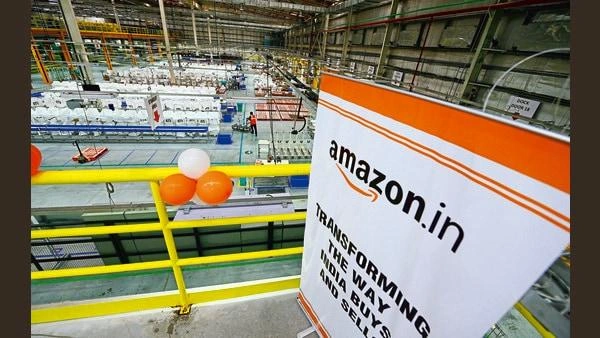
So while competitors focused heavily on storefronts and branding, Amazon invested aggressively in warehouses, delivery systems, supply chains, and fulfillment technology.
At the time, those investments looked excessive.
Today, they look inevitable.
Because modern e-commerce is not won by who has products.
It is won by who can move products fastest and most efficiently.
Prime Changed Customer Psychology
Amazon Prime quietly transformed consumer expectations across the internet.
Before Prime, waiting several days for deliveries felt normal.
After Prime, fast delivery started feeling expected.
That psychological shift became incredibly important.
Customers no longer compared Amazon only against retailers.
They compared every online shopping experience against Amazon-level convenience.
The company trained consumers to expect:
instant availability, simplified returns, fast shipping, and frictionless purchasing.
And once customer behavior changes at scale, entire industries are forced to adapt around it.
The Smartest Thing Amazon Built Was AWS
While most public attention stayed focused on online shopping, Amazon was quietly building something much bigger:
Amazon Web Services.
At first, cloud infrastructure sounded boring compared to consumer technology.
But AWS eventually became one of the most important systems powering the modern internet.
Startups, enterprises, streaming platforms, SaaS companies, AI businesses, and government systems now rely heavily on cloud infrastructure instead of managing physical servers themselves.
This changed technology economics completely.
Companies no longer needed massive infrastructure investments to launch digital businesses globally.
AWS helped make the modern startup ecosystem possible.
Data Became Amazon’s Competitive Engine
Amazon collects enormous amounts of behavioral information.
What people search for.
What they buy.
How long they browse.
What they abandon in carts.
What products perform well together.
That data allows Amazon to optimize:
pricing, recommendations, logistics, advertising, inventory forecasting, and customer experience continuously.
Over time, the company became less like a retailer and more like a giant optimization machine powered by data.
And that operational intelligence became difficult for competitors to match.
The Company Expanded Into Everything Slowly
One reason Amazon became so dominant is that it rarely looked like it was moving aggressively at first.
The company entered industries gradually:
books, electronics, streaming, cloud computing, groceries, smart devices, advertising, healthcare, and AI infrastructure.
Individually, each expansion sometimes seemed manageable.
Collectively, they created one of the largest digital ecosystems in the world.
Amazon understood something many businesses miss:
control over infrastructure creates opportunities everywhere else.
Amazon Turned Efficiency Into Culture
Inside the company, operational efficiency became deeply embedded into decision-making.
Automation, measurement, optimization, experimentation, and scale became central parts of Amazon’s identity.
That culture helped the company move extremely fast operationally.
But it also created criticism around workplace pressure, employee expectations, and relentless productivity standards.
Amazon’s growth model showed both sides of hyper-efficiency:
extraordinary scale and extraordinary intensity.
AI Fits Perfectly Into Amazon’s Strategy
Artificial intelligence aligns naturally with how Amazon already operates.
The company depends heavily on:
prediction systems, recommendation engines, logistics optimization, inventory forecasting, cloud infrastructure, and automation.
AI strengthens all of these areas simultaneously.
That is why Amazon is investing heavily in AI infrastructure through cloud services and enterprise platforms rather than focusing only on flashy consumer AI products.
The company understands that the most profitable AI layer may not always be the chatbot users see.
It may be the infrastructure businesses depend on behind the scenes.
Amazon Changed Business Expectations Permanently
Today, businesses across industries face pressure created partly by Amazon’s standards.
Customers now expect:
fast delivery, transparent tracking, low friction, personalized recommendations, and constant availability almost everywhere online.
The company reshaped not only e-commerce but also broader digital consumer behavior.
And once expectations rise, they rarely return to previous levels.
The Real Lesson Behind Amazon’s Success
Amazon’s biggest strength was not simply selling products online.
It was recognizing early that digital economies eventually become infrastructure economies.
Warehouses became infrastructure.
Cloud platforms became infrastructure.
Delivery systems became infrastructure.
Data systems became infrastructure.
And companies controlling infrastructure often gain advantages that competitors struggle to overcome later.
That is why Amazon became far bigger than an online store.
It quietly became one of the foundational systems behind how the modern internet economy operates.