


Artificial intelligence is often presented as a clean digital revolution.
- AI Runs on Infrastructure, Not Magic
- Why Data Centers Are Expanding So Rapidly
- Cooling AI Systems Has Become a Major Challenge
- The AI Boom Is Increasing Pressure on Power Grids
- Why Big Tech Companies Are Racing Toward Nuclear and Renewable Energy
- AI Efficiency Is Becoming a Competitive Advantage
- The Future of AI Is Also a Physical Infrastructure Story
- The Next Big AI Competition May Not Be About Models
People see smart chatbots, AI-generated images, automated workflows, and futuristic software transforming businesses across industries. Everything feels virtual, lightweight, and almost invisible.
But behind every AI-generated response lies something very physical:
massive amounts of electricity.
As AI adoption accelerates globally, technology companies are quietly facing a problem that could shape the future of the industry itself — energy consumption.
And the scale of that challenge is far bigger than most people realize.
AI Runs on Infrastructure, Not Magic
Modern AI systems require enormous computing power.
Training large AI models involves processing vast amounts of data through thousands of high-performance GPUs operating continuously for weeks or even months. Even after training is complete, serving millions of AI requests daily still demands large-scale infrastructure.
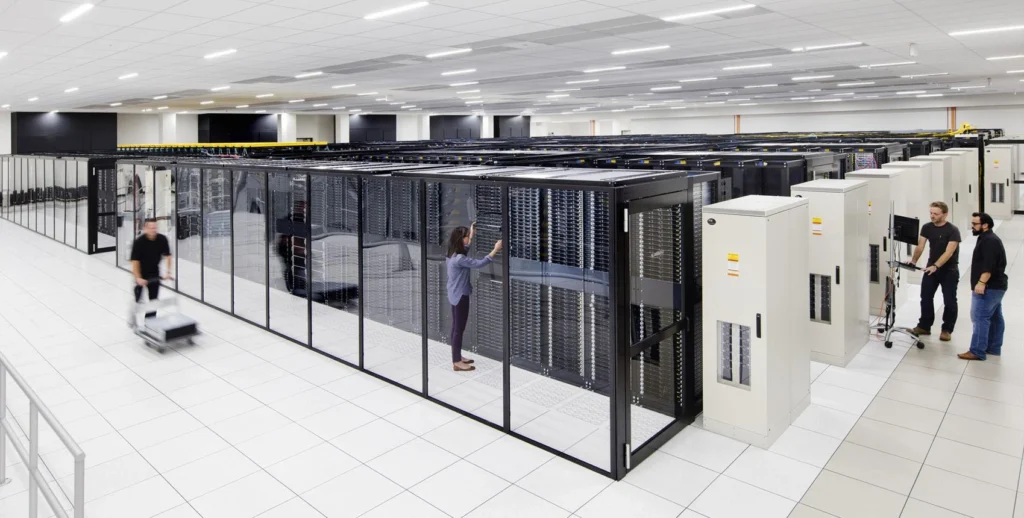
That infrastructure lives inside massive data centers filled with:
- GPU clusters
- Cooling systems
- Networking equipment
- Backup power systems
- Storage infrastructure
These facilities consume extraordinary amounts of electricity.
As AI models become larger and more advanced, power requirements continue rising alongside them.
Why Data Centers Are Expanding So Rapidly
Cloud computing already pushed demand for data centers higher over the past decade.
AI is now accelerating that growth dramatically.
Technology companies are investing billions into expanding AI infrastructure because demand is increasing faster than existing capacity can handle. Businesses want AI assistants, automation tools, recommendation systems, analytics platforms, and AI-powered customer support integrated into daily operations.
All of this requires computing infrastructure operating at scale.
Some modern AI-focused data centers now consume as much electricity as small cities.
That reality is forcing governments, utility providers, and technology companies to rethink long-term energy planning.
Cooling AI Systems Has Become a Major Challenge
One of the least discussed aspects of AI infrastructure is heat.
High-performance GPUs generate enormous amounts of it.
Keeping AI servers operational requires advanced cooling systems running continuously. Traditional air cooling is often no longer sufficient for modern AI workloads, leading many companies to adopt liquid cooling technologies inside data centers.
Cooling itself consumes additional energy.
In some facilities, cooling infrastructure represents a major portion of total operational power usage.
As AI hardware becomes more powerful, managing heat efficiently is becoming just as important as improving computational performance.
The AI Boom Is Increasing Pressure on Power Grids
The rapid expansion of AI infrastructure is beginning to affect regional electricity systems.
Large-scale data centers require stable, uninterrupted energy supplies. When multiple AI facilities are built in the same region, local power demand can rise significantly.
This creates new challenges:
- Grid capacity limitations
- Higher infrastructure costs
- Increased pressure on renewable energy systems
- Concerns about long-term sustainability
Some technology companies are now directly investing in renewable energy projects to secure future power needs for their AI operations.
Energy availability may eventually become one of the biggest limiting factors for AI expansion.
Why Big Tech Companies Are Racing Toward Nuclear and Renewable Energy
To support future AI growth, major technology companies are aggressively exploring long-term energy partnerships.
Solar, wind, hydroelectric, and even nuclear energy are becoming increasingly important in AI infrastructure planning.
The reason is simple:
AI requires predictable, scalable energy access.
Renewable energy also helps companies manage growing environmental criticism surrounding large-scale AI operations.
As sustainability concerns increase globally, businesses face pressure to reduce the environmental impact of expanding digital infrastructure.
This creates an unusual intersection between:
- Artificial intelligence
- Energy policy
- Climate strategy
- Infrastructure investment
The future of AI may depend as much on energy innovation as software development.
AI Efficiency Is Becoming a Competitive Advantage
For years, AI development focused heavily on building larger and more capable models.
Now efficiency is becoming equally important.
Technology companies are investing heavily in:
- Smaller optimized models
- More efficient hardware
- Smarter chip architectures
- Reduced training costs
- Lower inference power usage
The companies capable of delivering powerful AI systems with lower infrastructure costs may gain major long-term advantages.
Efficiency is no longer only a technical improvement.
It is becoming an economic necessity.
The Future of AI Is Also a Physical Infrastructure Story
Most discussions about artificial intelligence focus on software capabilities.
But the AI revolution is also deeply connected to physical infrastructure:
- Energy systems
- Semiconductor manufacturing
- Global supply chains
- Data center construction
- Cooling technologies
- Internet backbone networks
AI is not just changing digital products.
It is reshaping industrial infrastructure worldwide.
And as businesses continue integrating AI into everyday operations, the demand for computing power may increase far beyond current expectations.
The Next Big AI Competition May Not Be About Models
The next phase of the AI race may depend less on who builds the smartest chatbot and more on who can sustainably power AI systems at scale.
Because in the end, artificial intelligence is only as powerful as the infrastructure supporting it.
And that infrastructure runs on energy.