


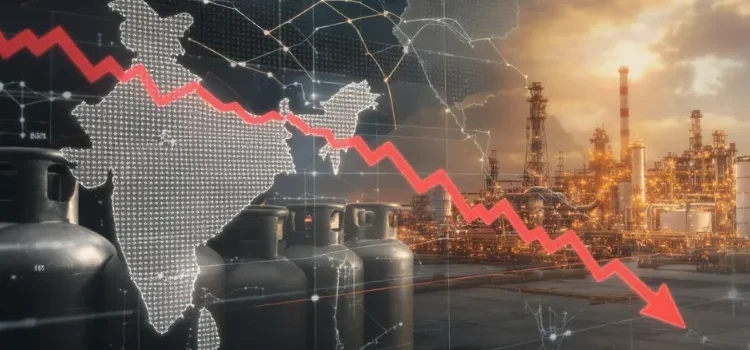
India’s LPG demand witnessed a sharp 16% drop in April, highlighting how global geopolitical tensions—particularly in West Asia—can significantly influence domestic energy consumption patterns. While seasonal variations are common, this sudden decline points toward deeper structural and economic shifts.
Beyond Seasonal Trends: What Caused the Decline
April typically marks a transitional period in LPG usage due to changing weather conditions. However, this year’s decline cannot be explained by seasonality alone.
The ongoing West Asia crisis has disrupted global energy supply chains, leading to uncertainty in pricing and availability. As a result, both consumers and distributors have adopted a cautious approach, reducing overall demand.
Global Geopolitics and Energy Dependency
India relies heavily on LPG imports, with a significant portion sourced from West Asia. Any instability in this region directly affects supply flows and pricing structures.
Geopolitical tensions create ripple effects across global markets, forcing importers to adjust procurement strategies. Delays, cost fluctuations, and supply risks all contribute to reduced consumption levels.
Market Behavior and Economic Indicators
The drop in LPG demand also reflects changing market behavior. Businesses are becoming more responsive to global developments, adjusting operations based on cost pressures.
Energy consumption is often seen as a key economic indicator. A decline suggests cautious spending, operational adjustments, and a broader shift in economic activity.
Impact on Households and Businesses
For households, LPG is a primary cooking fuel. Price increases or supply uncertainty often lead to reduced usage or a shift toward alternative energy sources.
In commercial sectors such as hospitality and small businesses, energy costs directly affect profitability. As uncertainty rises, organizations focus on efficiency and cost control.
Industry Adaptation and Strategic Response
Energy companies are actively responding to these challenges by:
- Diversifying supply sources
- Improving storage infrastructure
- Implementing flexible pricing strategies
These measures aim to build resilience against future disruptions.
Government Role in Stabilization
Policy intervention plays a crucial role in managing energy volatility. Governments may use:
- Strategic reserves
- Subsidies
- Regulatory adjustments
Additionally, long-term initiatives such as renewable energy adoption are being explored to reduce dependency on imports.
Conclusion
The decline in LPG demand is more than a temporary fluctuation. It reflects the interconnected nature of global energy systems and domestic markets. Moving forward, adaptability, strategic planning, and diversification will be key to ensuring stability.