

Over the last two years, one word has quietly taken over the technology industry:
- The Era of Unlimited Spending Is Ending
- Artificial Intelligence Accelerated the Pressure
- The Productivity Obsession Is Also Psychological
- Remote Work Changed How Companies Measure Value
- Productivity Does Not Always Mean Innovation
- The Companies Winning Today Balance Both
- The Future Workplace Will Look Very Different
- Productivity Became the New Competitive Weapon
Productivity.
Almost every major tech company now talks about doing more with fewer people, automating repetitive work, reducing operational costs, and increasing efficiency through AI tools.
At first glance, this sounds like a normal business trend.
But underneath it lies a much bigger reality:
the economics of the technology industry are changing faster than many companies expected.
The Era of Unlimited Spending Is Ending
For years, tech companies operated in a growth-first environment.
Investors rewarded expansion more than profitability. Startups hired aggressively, built massive teams, and focused heavily on scaling as quickly as possible.
That model worked when capital was cheap and digital markets were growing rapidly.
But rising operational costs, economic uncertainty, and increasing competition changed the equation.
Investors now expect businesses to become financially disciplined much earlier.
Companies are being pressured to show:
- sustainable growth
- operational efficiency
- clear profitability paths
As a result, productivity has shifted from a management buzzword into a survival strategy.
Artificial Intelligence Accelerated the Pressure
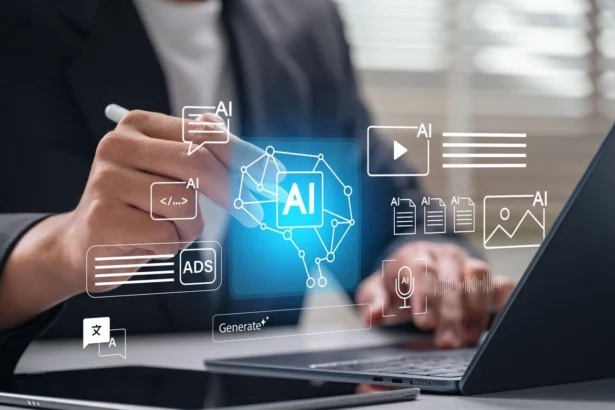
AI tools dramatically changed executive expectations.
Tasks that previously required hours of manual work can now often be completed in minutes using automation systems, AI copilots, analytics tools, or workflow platforms.
This created an uncomfortable question inside many companies:
If technology can improve output so significantly, why are operations still running inefficiently?
That question is reshaping hiring decisions, team structures, and internal workflows across industries.
Businesses are no longer evaluating employees only based on effort.
They increasingly evaluate how effectively people use modern tools to maximize results.
The Productivity Obsession Is Also Psychological
There is another reason productivity became such a dominant topic:
fear.
Technology companies know markets are changing rapidly.
AI is disrupting industries unexpectedly. Startups can scale faster with smaller teams. Competition is becoming global. Software development cycles are accelerating.
In this environment, companies worry about becoming slow.
And in technology, slowness is dangerous.
This fear pushes organizations toward constant optimization:
shorter meetings, faster deployments, leaner teams, automated reporting, AI-assisted workflows, and data-driven decision-making.
Efficiency is no longer viewed as optional improvement.
It is becoming part of competitive identity.
Remote Work Changed How Companies Measure Value
The shift toward remote and hybrid work also intensified the productivity conversation.
Many businesses struggled to evaluate performance using traditional management methods. Companies that once relied heavily on physical presence suddenly needed measurable outcomes instead.
That pushed organizations toward:
- analytics dashboards
- workflow tracking tools
- performance metrics
- project visibility systems
- AI-powered reporting
Some companies improved flexibility successfully.
Others became overly focused on monitoring and optimization.
This created tension between productivity and employee well-being.
Because while businesses want higher output, employees increasingly worry about burnout, constant monitoring, and unrealistic expectations.
Productivity Does Not Always Mean Innovation
One hidden risk in the productivity obsession is short-term thinking.
Highly optimized companies may improve efficiency while accidentally reducing creativity.
Innovation often requires:
- experimentation
- flexibility
- failure
- exploration
- long-term thinking
Those things are difficult to measure through productivity dashboards.
Some of the most important breakthroughs in technology history came from environments where employees had space to think beyond immediate metrics.
This is why some companies struggle after aggressive cost-cutting phases.
Efficiency can improve operations, but excessive optimization sometimes weakens innovation culture over time.
The Companies Winning Today Balance Both
The smartest businesses are not simply reducing costs.
They are redesigning workflows intelligently.
Instead of replacing people entirely, they use AI and automation to remove repetitive tasks while allowing employees to focus on higher-value work.
That balance matters.
Companies that combine:
- strong operational efficiency
- adaptable teams
- healthy work culture
- smart automation
- long-term innovation
are positioning themselves more sustainably than businesses focused only on short-term productivity numbers.
The Future Workplace Will Look Very Different
The modern workplace is slowly evolving into an AI-assisted environment.
Employees increasingly work alongside:
- AI copilots
- automation systems
- predictive analytics
- workflow assistants
- intelligent dashboards
This changes expectations for both companies and workers.
Being productive no longer simply means working harder.
It increasingly means working smarter with technology.
And as AI tools become more integrated into daily operations, businesses may continue shrinking repetitive workloads while increasing expectations around strategic thinking, creativity, and adaptability.
Productivity Became the New Competitive Weapon
The technology industry is entering a phase where speed and efficiency directly influence survival.
Companies capable of moving faster, adapting quicker, and operating leaner gain major advantages in rapidly changing markets.
That is why productivity became such a central obsession across the business world.
Not because companies suddenly care more about time management.
But because in the AI era, operational efficiency is becoming one of the strongest forms of competitive power.