


The internet loves AI products that feel magical.
- AI Is Incredibly Expensive to Operate
- The Public Sees Products — Investors See Infrastructure
- Cloud Providers Quietly Became the Biggest Winners
- AI Demand Is Growing Faster Than Hardware Supply
- The Energy Costs Are Becoming Serious
- Smaller AI Startups Face a Dangerous Trap
- The Real AI War Is Happening Behind the Scenes
- AI Is Becoming an Industrial Industry
- The Future of AI May Depend on Cost More Than Capability
A chatbot writes code instantly.
An image generator creates artwork in seconds.
A video AI tool produces cinematic clips from simple text prompts.
To users, these systems feel almost effortless.
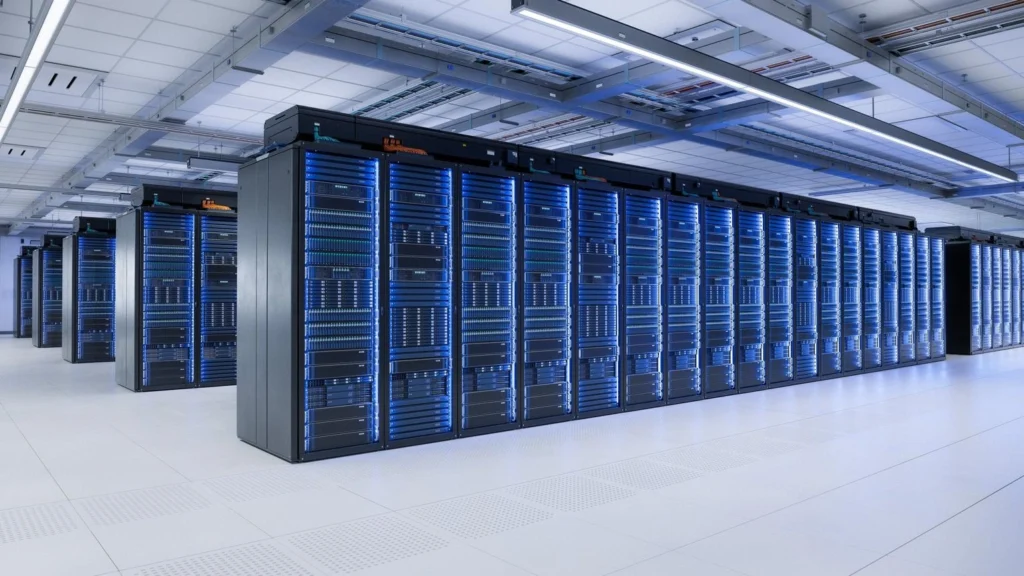
But behind every smooth AI experience sits an enormous layer of infrastructure most people never see — and maintaining that infrastructure is becoming one of the most expensive battles in modern technology.
AI Is Incredibly Expensive to Operate
Traditional software companies mostly paid for developers, servers, and storage.
AI companies operate differently.
Every user interaction requires computational power. Millions of prompts flowing through AI systems daily demand huge clusters of GPUs running continuously across global data centers.
And GPUs are expensive.
Not just to purchase, but also to power, cool, maintain, and replace.
Some advanced AI hardware costs more than luxury cars. Large AI companies deploy thousands of these systems simultaneously just to keep services running reliably.
That means every viral AI product comes with massive operational costs hidden beneath the interface.
The Public Sees Products — Investors See Infrastructure
Most internet users focus on what AI tools can do.
Investors focus on what they cost.
This is why many AI startups face enormous pressure despite rapid popularity. High user growth sounds impressive, but serving millions of AI requests can become financially brutal without efficient infrastructure.
A company may gain millions of users quickly while still losing enormous amounts of money behind the scenes.
That creates a difficult reality:
in AI, popularity alone does not guarantee sustainability.
Cloud Providers Quietly Became the Biggest Winners
While startups compete for user attention, cloud companies are making money from the infrastructure race itself.
AI businesses rely heavily on:
GPU access,
cloud computing,
data storage,
network bandwidth,
and distributed infrastructure.
This benefits companies operating massive cloud ecosystems because every AI boom increases demand for computational resources.
In many ways, AI resembles previous gold rushes throughout history:
the companies selling the tools and infrastructure often become as powerful as the businesses chasing the opportunity itself.
AI Demand Is Growing Faster Than Hardware Supply
One reason AI infrastructure became so expensive is because demand exploded unexpectedly fast.
Technology companies worldwide suddenly wanted:
AI assistants,
enterprise automation,
large language models,
recommendation systems,
AI search,
and intelligent analytics tools.
But semiconductor manufacturing cannot scale instantly.
This created shortages around advanced GPUs and AI accelerators, pushing prices dramatically higher and making access difficult for smaller startups.
Some companies now compete not only for users or funding, but also for computing capacity itself.
The Energy Costs Are Becoming Serious
Running AI systems at global scale requires extraordinary amounts of electricity.
Data centers consume massive power continuously because GPUs generate huge amounts of heat while processing AI workloads.
Cooling systems alone require significant infrastructure investment.
As AI adoption grows, energy consumption is becoming one of the industry’s biggest long-term concerns.
Technology companies are now investing heavily in:
renewable energy,
advanced cooling systems,
efficient chip architectures,
and optimized AI models designed to reduce computational cost.
Because eventually, efficiency may matter just as much as intelligence.
Smaller AI Startups Face a Dangerous Trap
The AI market currently looks exciting from the outside, but smaller startups face difficult economics.
Many rely heavily on third-party AI infrastructure providers. This means operational costs increase directly as user activity grows.
Ironically, rapid success can sometimes become financially stressful.
If businesses fail to monetize effectively, infrastructure expenses can grow faster than revenue.
That is why many AI startups now focus aggressively on:
subscriptions,
enterprise contracts,
API pricing,
and premium productivity tools instead of purely free consumer growth.
The Real AI War Is Happening Behind the Scenes
Public conversations often focus on which AI model is smartest.
But behind the scenes, companies are competing on something even more important:
infrastructure efficiency.
The businesses that survive long term may not simply be those with the best AI responses.
They may be the companies capable of delivering powerful AI systems sustainably at global scale without destroying profitability.
That challenge involves:
hardware,
cloud architecture,
energy management,
supply chains,
and semiconductor access as much as software itself.
AI Is Becoming an Industrial Industry
People still talk about AI like it is only a software revolution.
In reality, it increasingly resembles industrial infrastructure.
Modern AI depends on:
factories producing advanced chips,
global logistics networks,
large-scale energy systems,
massive cloud platforms,
and physical data centers operating around the clock.
The industry is becoming deeply tied to real-world infrastructure in ways most internet businesses never were.
The Future of AI May Depend on Cost More Than Capability
AI systems will continue improving.
But eventually, the companies dominating the market may not simply be the ones creating the most advanced models.
They may be the ones capable of operating them efficiently enough to make large-scale AI economically sustainable.
Because behind every seemingly effortless AI interaction is an enormous machine consuming infrastructure, energy, hardware, and money at a scale the average user never sees.